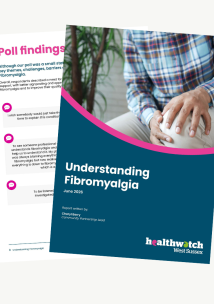
Understanding Fibromyalgia
In spring 2026 we undertook a piece of work to better understand the experiences of people living with Fibromyalgia, with a particular focus on access to health, wellbeing and community services.
42 people responded to our poll, with 90% of people living with Fibromyalgia. Most people were from the Horsham, Worthing, Crawley, and Chichester areas of West Sussex.
This report explores the experiences of people living with Fibromyalgia, focusing on diagnosis, support, and service access.
Key Findings
- 77% of respondents had received a Fibromyalgia diagnosis.
- 56% had waited up to 5 years, and 38% had waited 5 - 10 years.
- Found the diagnosis process difficult; patients need more support and clearer information.
- Positive views on GP, pain management, physiotherapy; dissatisfaction with mental health support.
- Main improvement areas include; more time for healthcare professionals to explain the condition clearly to patients and easier access to information and support.
- Patients report inconsistent care, long waits, and lack of understanding from medical staff.
- Support needs include; social prescribers, support groups, and occasional check-ins with primary care and better support with benefits, housing, and social care applications..
- Many feel unsupported in daily activities, with some unable to leave home or access basic needs.
- Calls for increased professional awareness, better signposting, and local support mapping.
- Emphasis on integrated, pragmatic approaches combining medical, self-care, and social support.
Summary and next steps
This small statistical sample followed up on community engagement activities we carried out we heard from a number of people who had experienced challenges and a lack of support after a fibromyalgia diagnosis.
The Poll findings would suggest there is benefit in circulating this poll summary report, to our contact listing as well as primary care, musculoskeletal (MSK)services, pain management, mental health service, social prescribing, and community support teams.
Recommendations
- Consider if a short briefing or learning session on Fibromyalgia could better support understanding amongst healthcare professionals.
- Identify what support is already available locally, including peer support groups, hydrotherapy, pain management programmes, and practical help.
- Feed findings into service improvement conversations.
- Use poll insights to inform discussions with commissioners, providers, and voluntary and community sector partners.
Report
Download the full Understanding Fibromyalgia report
Report: Understanding Fibromyalgia