Poll Results: NHS Support for Children’s Learning Needs in Sussex
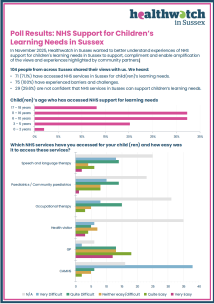
104 people from across Sussex shared their views with us.
We heard:
- 71 (71.1%) have accessed NHS services in Sussex for child(ren)’s learning needs.
- 75 people commented on the barriers and challenges they had faced in accessing NHS services in Sussex for child(ren)’s learning needs.
- 36 (36.7%) were not very confident that NHS services in Sussex can support children’s learning needs.
Access to NHS Services
Services most commonly accessed included:
- CAMHS
- GPs
- Health visitors
- Occupational therapy
- Paediatrics /Community paediatrics
- Speech and language therapy
Types of Learning Needs Reported
- Speech, language, and communication needs
- Autism spectrum condition
- Special Educational Needs and Disabilities (SEND)
- Dyslexia and other specific learning difficulties
- Social, emotional, and mental health needs
Barriers and Challenges
- Extremely long waiting lists (often 2+ years for assessments)
- Feeling unheard and having to repeatedly explain their child’s needs
- Lack of support after diagnosis
- Inconsistent thresholds for support (“not bad enough” vs “too complex”)
- Significant gaps in services for young people transitioning to adulthood
Confidence in NHS Support
- Only a small minority felt confident in NHS services
- Overall confidence levels were low, with many respondents feeling uncertain or pessimistic
What experienced barriers and challenges you have faced?
It's been a constant battle to be heard. I've lost count of the number of times I've had to explain my son's situation.
Barriers getting anyone to listen properly and to get the support required.
Huge waiting lists; huge gap for young adults; inconsistency; told not bad enough even after first suicide attempt; told too bad for other services. The system is BROKEN.
What improvements would you like to see in NHS services for children’s learning needs in Sussex?
More proactive support, not just when a child has reached crisis point.
Quicker assessment times/shorter waits for assessments and increased knowledge of staff around additional needs.
More mental health support, more support for students who need assessments or diagnoses, more toolkits to teach us to support them in a way that will work, and get engagement from them.