What are people telling Healthwatch about urgent dental care?
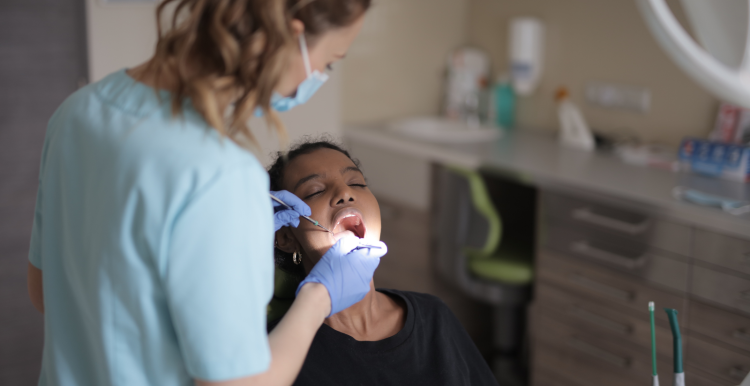
Urgent dental care is different from routine dentistry. It’s meant to act as a safety net for people when they experience a sudden dental crisis, such as a broken tooth or severe tooth pain.
It has become a key political issue, with the government committing to delivering its manifesto commitment of delivering 700,000 additional urgent appointments per year through to 2028-29.
If you have a dental emergency you can (or should be able to) get an urgent dental care appointment within 24 hours or seven days, depending on your symptoms. Sometimes this is through a dentist who sees you regularly on the NHS, or via an urgent appointment arranged for you calling NHS111, who may have details of practices that will see urgent cases.
However, people across England tell Healthwatch they are unable to sign up with an NHS dentist for routine care. Even when they have been taken on as regular patients at an NHS dentist, many people wait months for a routine appointment. Healthwatch have repeatedly highlighted these significant issues with accessing NHS dentists.
NHS data also reflects this ongoing feedback. In September 2025, 10% fewer adults had seen an NHS dentist in the past 24 months compared to 2019.
As a result, problems are not being prevented or treated early enough, and urgent care becomes the only form of dental care people can access.
What is Healthwatch doing to improve NHS dental care?
They have repeatedly highlighted these significant issues with accessing NHS dentists.
Find out more about the changes they're calling for and what people are telling them about NHS dental care.
What are people telling Healthwatch?
Healthwatch decided to look into what people are telling us about their experiences of accessing urgent dental care:
- The system is hard to access
- Treatment options are limited
- Patients get stuck in a revolving door
- What is the impact on people's lives?
- Those most at risk are being left behind
The system is hard to access
NHS England’s guidance for local NHS services says that patients should be able to get urgent dental care through a defined point of access such as NHS 111. However, the feedback people share paints a different picture.
People told Healthwatch about long and exhausting attempts to secure an urgent NHS dentist appointment. For some, this meant hours spent on hold to NHS 111, while for others it meant being referred to urgent care and then being told that no appointments were available.
"I rang up [NHS 111] because I had an abscess. Her suggestion was for me to ring every single dental practice in the county, and over into Newcastle if needed." - Story shared with Healthwatch Barnet
NHS 111 online data shows that enquiries on the online webform about dental issues in England have risen recently. Between July and September 2025, enquiry volumes were around 20% higher than in the same period the previous year. When local Healthwatch teams in the North East conducted mystery shopping calls to urgent services, volunteers made up to 15 calls without finding any available urgent care.
The system is made harder to navigate because there are several ‘pathways’ to access care, and these can vary depending on where you live. The NHS website states that to get an urgent appointment you should simply “contact a dentist”, without distinguishing between NHS and private providers, or ring 111. However, the reality differs across the country.
In areas such as Essex, NHS 111 can book appointments directly into dental practice systems, but in other ICBs patients tell Healthwatch they are given contact details for local dentists by NHS 111 and told to arrange their own appointments. Greater Manchester has a county-wide urgent dental care service that you can ring directly.
In other locations, people face more barriers. Healthwatch heard that in some areas NHS 111 told patients they could not book urgent dental appointments at weekends. One patient in North Devon with a dry socket was told there was no urgent care available in the county, so they were sent to A&E and waited seven hours to receive antibiotics.
Without clear, consistent information, and with care varying across areas, people struggle to understand how to access the extra capacity promised in the new plan.
Treatment options are limited
After getting an urgent appointment, patients often say their treatment options are limited because NHS practices may only treat one tooth or problem at a time. Care can also differ greatly between clinics.
For example, some clinics only give antibiotics, while others only do extractions. The lack of options can leave patients frustrated, especially when services can't help with more complex dental issues or preventive care.
After giving urgent dental care, many practices don’t have any space to follow these patients up on the NHS. This leaves only the option of being followed up privately, which many people can’t afford. Without a route into NHS follow-on care, they find themselves returning to urgent services.
"There is an NHS emergency service locally, but the only option they offer is extractions. I lost three teeth because they wouldn't repair the fillings. I had to borrow money and go private." - Story shared with Healthwatch Herefordshire.
"I'm in pain every day having lost a filling and a crown. I got an emergency appointment but all they did was tell me that I needed treatment and I would have to use their private dentists. I don't have that sort of money on my pension." - Story shared with Healthwatch Isle of Wight.
Patients get caught in a revolving door
NHS England guidance makes clear that when you use urgent services, they should address the immediate problem, begin to help manage any underlying issues and support you to get further NHS treatment if needed.
Yet Healthwatch feedback suggests this is not happening consistently. When patients manage to get urgent dental treatment, many told Healthwatch the relief is only temporary. Once treated, and the swelling goes down, or the immediate pain subsides, they often no longer meet the threshold for "urgent” care, even though the underlying problem may remain unresolved and the pain may quickly return.
Without access to routine follow up care, some people find themselves cycling between their GP, A&E, and urgent care dentists without receiving definitive treatment. We can see this in the national data - attendances at A&E for dental conditions have risen almost 45%, from 81,773 in 2019/20 to 117,977 in 2023/24.
"I had a major toothache… cracked tooth since April 2024, no NHS appointment, been to an emergency dentist, but due to infection, I just got antibiotics yet again. Yet when the swelling goes down, I can't get an appointment, so I'm stuck in a cycle of agony that's affecting my life, my mental health and looking after my children." – story shared with Healthwatch England
What is the impact on people’s lives?
When urgent dental services shift from being a safety net for occasional crises to a default route for care, prevention is neglected, and patients suffer. People shared the consequences of limited access to care on their lives:
Pain and long-term damage
People report extreme pain, sleepless nights, and worsening dental health.
"I live in York, I have two broken teeth causing me constant pain and an abscess. I have no spare money and no transport. The only emergency dentist with availability is in Leeds. I live on painkillers." – Story shared with Healthwatch York.
Financial strain
Many people feel forced to pay hundreds or thousands of pounds for private treatment, borrow money from family and friends, or use their pensions or benefits to cover costs.
Travel burdens
Practices offering urgent dental appointments are often located far from people’s homes. People have described journeys of up to 110 miles, round trips taking two to five hours, with some even travelling abroad for treatment.
Dangerous self-treatments
Some people told Healthwatch they resorted to self-treatment or unprescribed antibiotics, raising serious risks.
“I had an emergency. There were no options for care. I pulled my own tooth out, got infected, had to get antibiotics from a non-trusted source, as no one was available to get medicine, as A&E won't see you, doctors can't, no dentists. I am now thousands in debt due to desperation” – Story shared with Healthwatch England
Those most at risk are being left behind
Vulnerable groups, including elderly patients and people with pre-existing or chronic illnesses who need regular dental care, are particularly impacted by the lack of routine and urgent care.
Healthwatch heard from one person whose teeth broke while undergoing both radiotherapy and chemotherapy but told them they could not find urgent care to fix them.
Another person with Parkinson's reported worsening symptoms because of their untreated tooth decay:
“Last year I had chemotherapy, and this gave me mouth ulcers and severe pain. Private dentists refused to see me because of the chemo. Tried 111 but told no NHS care was available. In desperation, I contacted the local medical dental school, and they extracted the tooth as an emergency.” - Story shared with Healthwatch England.
These experiences persist despite the Chief Dental Officer issuing guidance last year (which Healthwatch England pressed for) stating that “Patients with a diagnosis of cancer require prioritisation to prevent delay of vital medical care due to oral health problems.”
Healthwatch analysis of the latest NHS figures also reveals widening gaps in dental care between richer and poorer communities. Although the number of NHS dental treatments carried out in deprived areas has grown, people living in these areas are now 67% more likely to undergo urgent dental treatment than those in the most affluent areas – up from 40% in 2019.
The fact there is fewer NHS dentists in rural and deprived areas, forces low-income patients to rely on urgent care for preventable dental problems, as they cannot access routine care or afford private treatment.
Is access to urgent dental care likely to improve?
Thanks to the public speaking out on their poor experiences, and to campaigning by Healthwatch, improving NHS dentistry has been high on the political agenda. First, with a recovery plan from the Conservative government in early 2024, and then a Labour manifesto pledge in summer 2024 to deliver an extra 700,000 urgent dental appointments per year, through to 2028-29.
The rollout of these extra appointments has been slow. Clear instructions for delivering the government’s urgent care pledge were not issued to Integrated Care Boards (ICBs) until February 2025, and commissioners didn't receive the fine details of the policy until May 2025.
Despite urgent dentistry being a high public priority, there is still no clear picture of whether promised additional appointments are reaching patients.
Stephen Kinnock, the minister responsible for NHS dentistry, told MPs in March 2025 that data on the number of extra urgent appointments would be "published in due course" by the NHS Business Services Authority (NHSBSA). However, the NHSBSA is only sharing this information with dental contractors and commissioners rather than publicly.
Only once data is available will it be possible to judge whether the plan is on track or capable of meeting the full scale of unmet urgent care.
What needs to happen?
Urgent dentistry provides critical support for people experiencing dental crises. However, the current system is leaving too many patients trapped in cycles of pain, receiving only short-term fixes, and facing financial hardship.
This is why Healthwatch is calling for large scale dental access reform, to rebuild NHS dentistry around fair access, clear registration, and better support for patients.
Healthwatch recommends:
Transparent monitoring and accountability
NHSBSA should publish monthly progress data on the 700,000 urgent appointments target, in the same way progress is reported for hospital waiting lists
Consistent implementation of clinical guidance
ICBs, as NHS dental commissioners, should ensure dental practices are delivering care in line with the May 2025 service specification, which requires patients to be stabilised and supported.
Clear and accessible information for patients
ICBs should provide consistent, easy-to-understand information about how their populations can access urgent dental care and work to introduce central booking systems.
Give people the right to be registered with an NHS dentist
As part of dental contract reform, the government should introduce a legal right for people to register with an NHS dentist to improve access, strengthen prevention and patient pathways and support long-term planning.