Bowel Cancer Awareness Month April 2025

Symptoms of bowel cancer
Knowing the symptoms is important to help spot bowel cancer early. The earlier that it’s found, the more treatable it’s likely to be.
Bowel cancer is cancer that begins in the large bowel, which is made up of the colon and rectum. It’s sometimes called colorectal cancer.
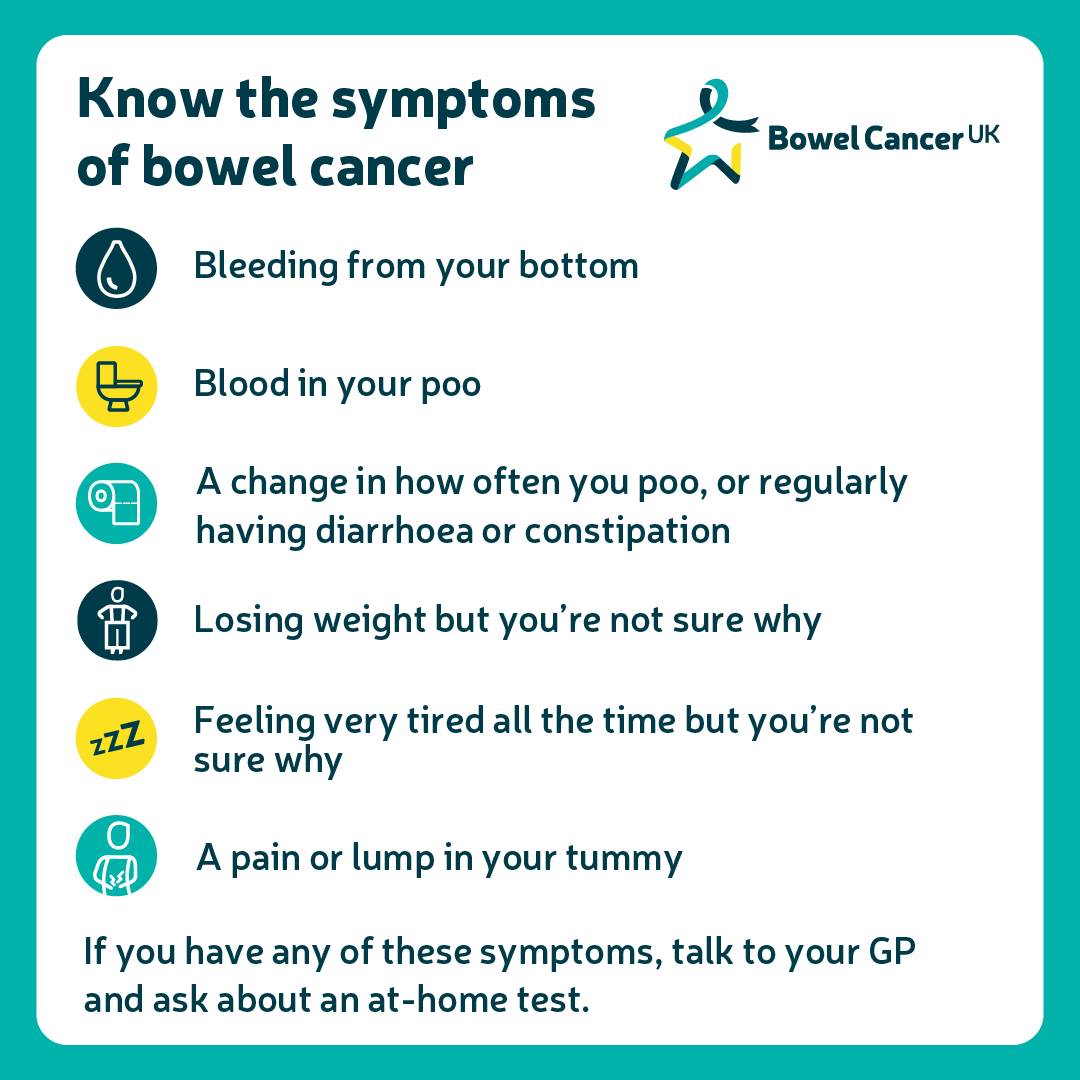
Symptoms can include:
- bleeding from your bottom
- blood in your poo
- a change in your pooing habits. You might be going more or less often, or have diarrhoea or constipation that might come and go
- losing weight but you’re not sure why
- feeling very tired all the time but you’re not sure why
- a pain or lump in your tummy
Having these symptoms doesn’t always mean you have bowel cancer, but it’s still important to find out what’s causing them.
Bowel cancer is a common type of cancer in both men and women. About 1 in 20 people will get it during their lifetime. It’s the fourth most common type of cancer, with most people being diagnosed aged over 60. Screening can help find it at an early stage when it’s easier to treat.
Everyone aged 60 to 74 (and those who are 56 years old) who are registered with a GP and live in England are automatically sent a bowel cancer home screening kit every two years. The NHS has the ambition to move toward everyone aged over 50 in the next few years.
At-home test
If you have any of these symptoms, or if you’re worried about any changes that you notice, visit your GP and ask about an at-home test. It’s important to know that not everyone will have all the symptoms of bowel cancer, or they may get different symptoms at different times. Even if you have just one symptom, your GP will want to see you.
Your GP can give you a poo test kit, called a faecal immunochemical test (FIT), to do at home. You’ll collect a small amount of poo. This is sent to a lab where they will test for blood in your poo. The result of this test will tell your GP whether you need further tests.