
Time to Talk Day 2025

It's run by Mind and Rethink Mental Illness, in partnership with Co-op and delivered by See Me with SAMH (Scottish Action for Mental Health), Inspire and Time to Change Wales.
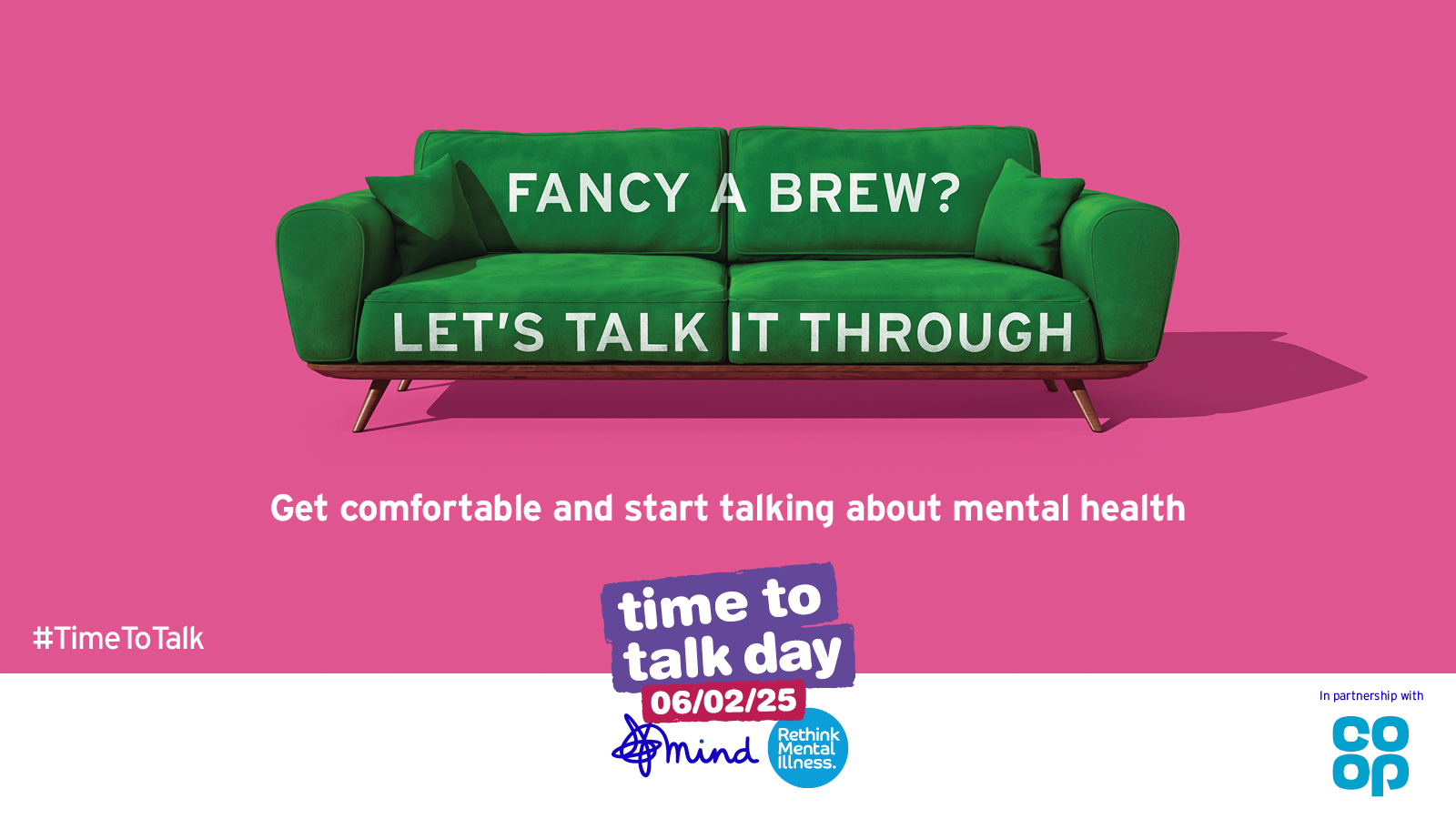
Everyone should feel comfortable talking about mental health. Explore Time to Talk website for ideas on how to take part in Time to Talk Day, from organising an event in your local library or hosting a lunch and learn session, to simply sharing information on social media or texting a friend.
Talking openly and honestly can be the first step towards better mental health for everyone. It can reduce stigma and help people feel comfortable enough to seek help when they need it.
There are times when we all need support with our mental health. It is something we need to actively take care of and sometimes we can find it easier to do this than other times.
Help is available if you are experiencing a mental health crisis or are feeling suicidal, are worried about a family or friend or want to find out the services available in Sussex that can support your mental health and wellbeing.
Tips for talking
There's no right or wrong way to talk about mental health. But these tips can help make sure you’re approaching the conversation in a helpful way.
Ask questions and listen
Asking questions can give the person space to express how they’re feeling and what they’re going through. And it can help you to understand their experience better. Try to ask questions that are open and not leading or judgmental. For example, “how does that affect you?” or “what does it feel like?”
Think about the time and place
Sometimes it’s easier to talk side by side rather than face to face. If you do talk in person, you might want to chat while doing something else. You could start a conversation when you’re walking, cooking or stuck in traffic. But don’t let the search for the perfect place put you off!
Don't try and fix it
It can be hard to see someone you care about having a difficult time. Try to resist the urge to offer quick fixes to what they’re going through. Learning to manage or recover from a mental health problem can be a long journey. They’ve likely already considered lots of different tools and strategies. Just talking can be really powerful, so unless they’ve asked for advice directly, it might be best just to listen.
Treat them the same
When someone has a mental health problem, they’re still the same person as they were before. When a friend or loved one opens up about mental health, they don’t want you to treat them any differently. If you want to support them, keep it simple. Do the things you’d normally do.
Be patient
No matter how hard you try, some people might not be ready to talk about what they’re going through. That’s ok – the fact that you’ve tried to talk may make it easier for them to open up another time.