What to do if you fall this winter
Falls are common - around one in three people aged 65 and over who live at home will fall at least once a year, rising to one in two for those over 80 - but many of the injuries and worries that follow can be avoided if you know what to do.
A message from the Association of Ambulance Chief Executives on behalf of all UK ambulance services, supported by the British Geriatrics Society and the Royal College of Emergency Medicine.
If you do fall
Stay as calm as you can
Take a moment to check how you feel before trying to move. Rushing can make things worse.
If you feel able to get up safely
- Take your time - don't hurry.
- Roll onto your side, then push up onto your hands and knees.
- Crawl to something sturdy (a heavy chair, the sofa, or the bath).
- Place one foot flat on the fioor keen hold of the sturdy item
and slowly stand up. - Sit down somewhere safe and rest for a while.
If you cannot get up
- If you can reach a phone, lifeline alarm or pendant, use it straight away for help.
- If you can't reach one, shout for help or bang on the floor or wall to attract a neighbour's attention
- Keep warm - pull a coat, blanket, rug or towel over you if you can reach one.
- Move as much as you comfortably can (wiggle arms and legs or roll gently from side to side) every half hour or so. ThIs helps your circulation and reduces the risk of pressure sores.
- If you're going to be on the floor for a long time and have water within reach, take small sips to stay hydrated.
When to call 999 for an ambulance
Please ring 999 straight away if you or the person who has fallen:
- Cannot get up, even with help
- Is confused, not fully awake, drowsy or vomiting
- Has inured their head, neck, back or hip
- Has severe bleeding
If you encounter someone who has fallen, keep them warm and comfortable. Only help them up if it is clearly safe to do so - never try to lift or move someone yourself if you're unsure.
When to contact NHS 111
Call 111 (or visit www.111.nhs.uk) if you've had a fall and:
- You're in pain or feel unwell
- You're worried you might be injured
Simple steps to help prevent falls this winter
A few small changes can make a big difference to your safety and confidence:
Do
- Carry a mobile phone or wear a pendant alarm whenever possible
- Make sure someone trusted has a key or you nave a key-safe outside
- Practise getting up from the floor when you re feeling well (there are excellent short videos on the NHS inform website)
- Stay as active as you can - try to move a little every day and include activities that improve strength and balance at least twice a week
- Wear well-fitting slippers or shoes with good grip (avoid loose slippers or going barefoot)
- Use non-slip mats in the bath or shower
- Eat regular meals. drink plenty of fluids. and include calcium-rich foods for bone health
- Have your eyes and ears checked regularly
- Speak to your GP or pharmacist if you feel dizzy or unsteady - some medicines can affect balance.
Don't
- Struggle with jobs that feel risky (reaching high shelves, climbing steps) - ask for help
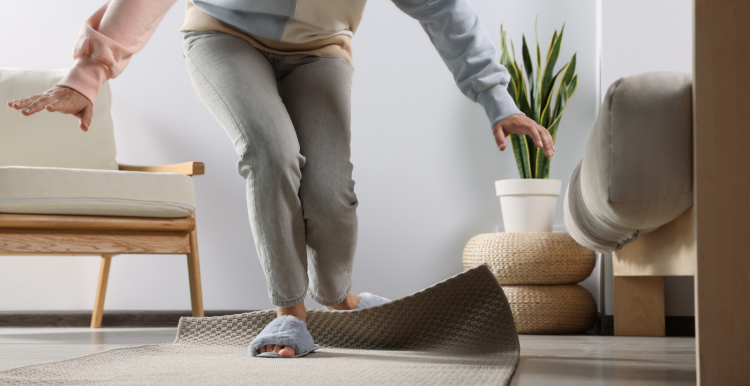
- Leave trailing wires, loose rugs or clutter where you walk
- Drink too much alcohol, especially if you feel unsteady
- Rush when you stand up - take your time
You don't have to manage alone. Family, friends, neighbours and local services are there to help.
Where to find more help
- NHS Inform - What to do after a fall (including helpful videos) website link.
- Age UK Preventing Falls advIce and free helpline: 0800 678 1602 (8am-7pm every day)
- Chartered Society of Physiotherapy - "Get Up and Go" booklet
- West Sussex Wellbeing - Simple steps to stay steady